
But, you have to protect yourself and your investment. It’s not fun trying to remove cat odors from carpets. If you’ve ever rented to a tenant who owned a dog with fleas, you know what a problem that can be. We’re happy to help balance the benefits of allowing pets with the restrictions required to protect your rental home. Please contact us at Rentor. We proudly stand behind our reputation as a locally preferred property management company in Eureka and surrounding areas in Humboldt County.
February 17, 2023
A Guide to Pets in Your Humboldt County Rental Property

Tenants in Humboldt County love their pets. If you have a dog or a cat of your own, you can understand that. They’re family members.
Most tenants would never dream of moving into a new home without their furry friends. When you’re renting out a property, you’ll have to consider that a large majority of your potential residents will have at least one pet. Not allowing pets will only reduce the size of your potential tenant pool.
Providing a pet-friendly rental property comes with a number of other benefits. You’ll have lower vacancy and fewer turnovers. You can also earn more money when you rent to tenants with pets, thanks to pet fees and pet rent.
There is a bit of extra risk with pet-friendly properties, however. Your tenant’s pet can damage the home and there’s also the liability that comes with some kinds of pets - what if your tenant’s dog attacks a plumber or a painter or a neighbor?
Risks are best mitigated with a good pet policy. Here’s a guide to pets in your rental property and how you can protect your investment when you allow them.
Screen Pets before Approving Them
You should screen any of the pets that are potentially moving in with a tenant. Ask for pictures and vet records. You can also meet the pet to see how it behaves around people. Make sure the pets are up to date on their vaccines and in good health.
There are screening services specific to pets that you can use to ensure the animal is a reasonable risk. You can also work with a
local property management company when you’re not sure about the pet and whether you want to accept it.
Pet screening can be part of your tenant screening process. Unlike tenants, pets are not protected by any specific laws. As long as they’re not service or support animals, you can make decisions about which pets you’ll accept and which pets you’ll deny based on any criteria you establish.
Deciding Between Pet Fees and Pet Deposits
Many owners will charge a pet deposit when tenants are moving in with pets. That’s one way to
protect your property and ensure you have the funds to cover any potential pet damage. A better idea, however, is to collect a pet fee.
There’s a difference.
A deposit is refundable. That means that by collecting a pet deposit, you have to return the money to the tenant at the end of the lease term if it’s determined the pet did not
cause any damage. A pet fee, however, is non-refundable. You’re going to keep that money even after a tenant moves out. This is one of the reasons a pet fee makes more sense. A pet deposit will incentivize a tenant to keep their pet from causing any damage, but a pet fee will protect you as well as increase what you earn on the tenancy.
Increasing Rental Value with Pet Rent in Humboldt County
Pet-friendly properties also allow you to charge an additional sum every month in pet rent.
In California, some pet rent is as much as $50 per pet. This extra rent should apply to all animals; the type of pet does not matter. Typically, people move in with a dog or a cat. But, if a tenant wants to live with their pet fish or a rabbit, those things qualify as pets and you should feel comfortable charging that pet fee. That’s because all these pets are dangerous to your property. If a fish tank is damaged and your property gets flooded, there’s a lot of potential for extra repairs.
Include the pet rent amount in your lease agreement as well as your pet policy. Tenants are typically willing to pay whatever is asked for the privilege of living with their pets.
What to Include in Your Pet Policy
A good pet policy will protect your
investment property and tell tenants what you expect in terms of behavior, maintenance, and cleanliness. Establish limits and guidelines in your pet policy as well so there aren’t any misunderstandings or potential conflicts. Some of the things you’ll want to include might be:
- Limits on the number of pets you’ll allow. Maybe you want to have a maximum of one pet per property. Or, you can allow two pets; one dog and one cat or two dogs. These are reasonable restrictions and they still allow you to earn more on your property while limiting the exposure to pet damage and mess.
- Age and size restrictions. Puppies and kittens are likely to be more potential trouble than mature cats and dogs. You can include these age requirements in your pet policy. Size limits are also acceptable. Maybe you only want small dogs under 20 pounds, for example.
- Breed restrictions for dogs. Check your landlord insurance policy. A lot of companies will refuse to cover what they consider to be dangerous dog breeds. Pit Bulls, for example, are on nearly every list of restricted breeds. If something happens at your property involving a Pit Bull, your insurance company may not cover you. Your pet policy should let your applicants know what kind of dogs are and are not allowed. You can set your own breed restrictions, as well. If you’re not comfortable renting to a particular dog, you can either deny the animal or request that your resident get an additional rider on their renter’s insurance that will cover them for that pet.
We recommend allowing pets in your Humboldt County rental home. You’ll attract more tenants, earn more income, and likely retain the residents who don’t want to go searching for another pet-friendly rental home at the end of the lease term.

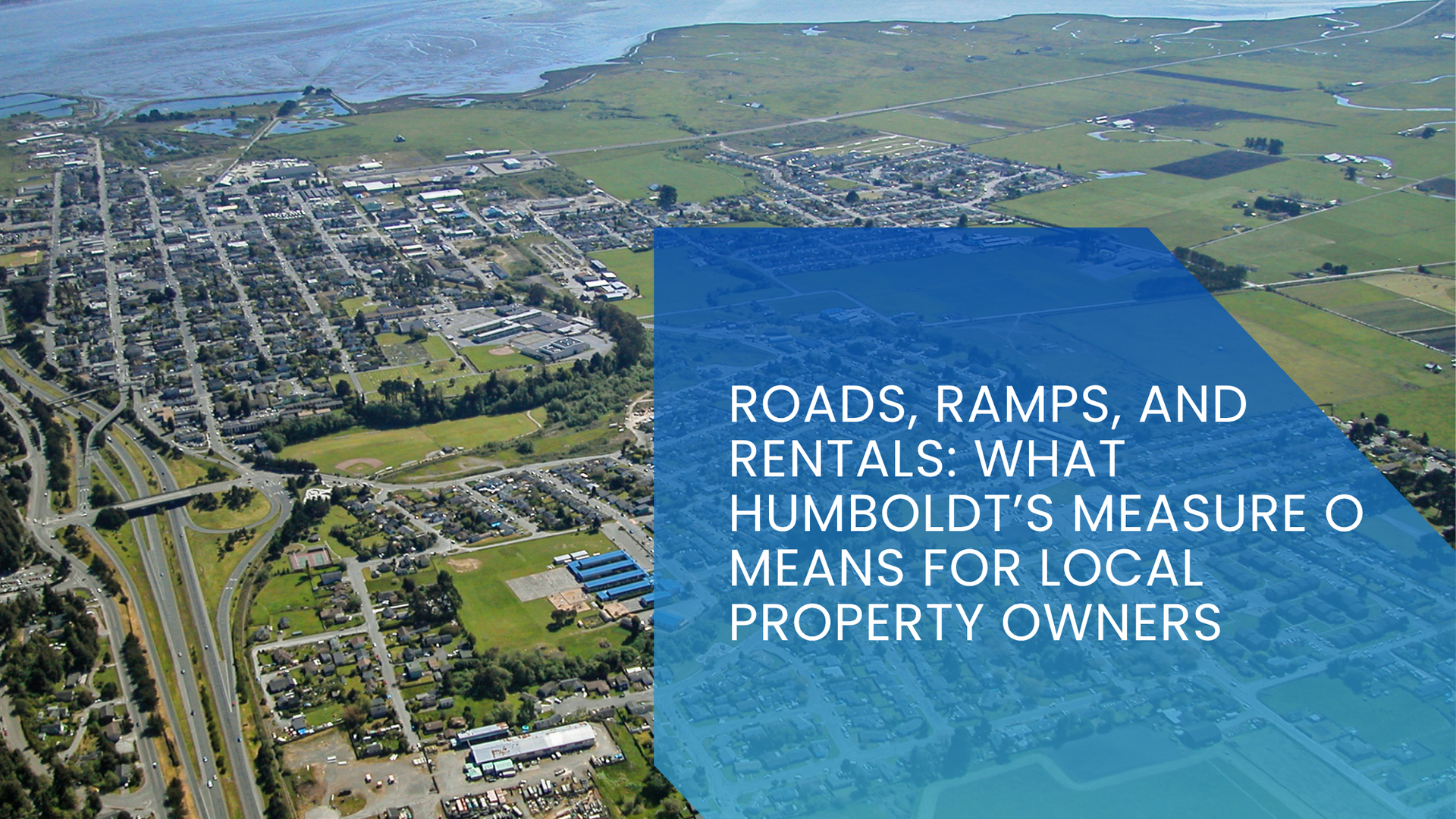
How Measure O’s $24 Million Infrastructure Boost Is Set to Drive Up Humboldt County Property Values and Keep Tenants Happy

What the Landmark Federal Legislation Means for Humboldt County Housing

Housing stability is the foundation of a strong community, but federal policy shifts are creating major hurdles right here in Humboldt County.

A tiered property checklist to protect your home from costly water damage, energy waste, and security risks while you’re away—whether for a quick weekend or an extended vacation.
Beyond Property Management: Why thriving Humboldt communities start with a healthy planet.

Humboldt County has adopted a new, unified County-Wide Travel and Tourism Marketing Strategy to modernize its historically fragmented tourism promotion. Led by Economic Development Director Peggy Murphy, the plan aims to create a centralized Destination Stewardship Organization (DSO) to ensure sustainable growth and better infrastructure management.

At Rentor, we don’t just manage properties; we care deeply about the communities we serve. We always keep our eyes on regional developments that could impact property values, local business growth, and the overall quality of life for our tenants and property owners here in Humboldt County.

RHNA (the Regional Housing Needs Allocation) is one of California’s most powerful drivers of housing policy, and right now, Humboldt County is deep in the trenches of planning. Whether you are a local landlord looking to expand your portfolio, a homeowner curious about neighborhood density, or a prospective buyer waiting for inventory to open up, here is what RHNA means for the future of our local market.

California’s wildfire landscape is shifting, and state leadership is introducing new tools to protect homes, lives, and communities. Following recent devastating fire seasons, the state has turned its focus toward a critical defense concept known as Zone 0—the first five feet directly surrounding a structure.
As a property management and real estate company deeply rooted in our local communities, Rentor spends a lot of time thinking about what makes a neighborhood a great place to live. Whether you are walking through Old Town Eureka , enjoying the vibrant plaza in Arcata , or taking a stroll down Main Street in Fortuna , clean parks, thriving local businesses, and litter-free streets are always at the top of the list.